Source Ultrasonic Automatic Cake Slicer for Bread Pizza Bakery
Compare 30 ultrasonic automatic cake slicer models from verified suppliers. Review specifications including voltage, power, and dimensions to find the right equipment for bakery production lines.
Key considerations
Products List






Comprehensive Sourcing Guide
Strategic Sourcing Guide for Ultrasonic Automatic Cake Slicers
Understanding the Core Technology and Operational Capabilities
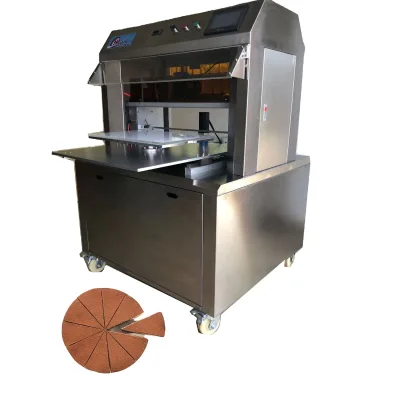
The procurement of an ultrasonic automatic cake slicer represents a significant investment in bakery automation, designed to address the specific challenges of cutting delicate, high-moisture, or sticky confectionery products. Unlike traditional mechanical blades that rely on friction and pressure, ultrasonic cutters utilize high-frequency vibrations to slice through products with minimal resistance. This technology is particularly critical for maintaining the structural integrity of soft cakes, breads, and pizzas, preventing the crushing or deformation often associated with standard slicing methods.
Based on observed market data, these machines are predominantly powered by electric sources, with specific models operating at voltages of 220V or 380V, depending on the industrial requirements of the facility. The power consumption varies significantly across different configurations, with some units rated at 1.1kW and others reaching up to 3.3kW. This variance suggests that buyers must carefully align the machine's power requirements with their existing electrical infrastructure. The operational speed is a key performance indicator, with high-end models capable of achieving a cut speed of less than one second per slice. This efficiency is vital for high-volume production lines where throughput is a primary constraint.
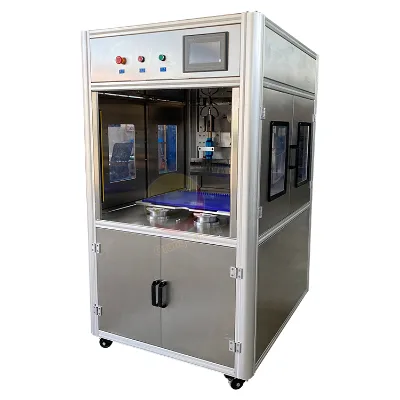
The automation level of these units ranges from manual to fully automatic. The fully automatic variants, often labeled as "Full-Automatic" or "Automatic Grade," integrate timing devices to ensure precise, repeatable cuts without constant operator intervention. These systems are designed to handle a variety of raw materials, including cake, bread, and pizza, making them versatile assets for bakeries that produce multiple product lines. The physical dimensions of the machinery also vary, with standard footprints observed in the range of 1200mm to 1550mm in length, and heights extending up to 1810mm. Prospective buyers must ensure their production floor has adequate clearance to accommodate these dimensions, particularly when considering the "Export Wooden Box Packaging" often used for shipping, which adds to the initial spatial requirements.
Technical Specifications and Material Construction
When evaluating the technical specifications of an ultrasonic automatic cake slicer, the material composition of the machine is a primary determinant of longevity and hygiene compliance. The vast majority of these industrial units are constructed from Stainless Steel, with specific references to Stainless Steel 304. This grade of stainless steel is preferred in food processing environments due to its resistance to corrosion and ease of cleaning, which are essential for maintaining food safety standards. The robust construction ensures that the machine can withstand the rigors of continuous operation in a bakery setting.
The mechanical design often includes a timing device to control the slicing cycle, although some models are noted as operating without this specific feature, relying instead on mechanical feed systems. The weight of the equipment is another critical specification, with observed values ranging from 380kg to 450kg. This substantial mass provides the necessary stability during the high-frequency vibration process, preventing the machine from shifting or vibrating excessively during operation. The "Automatic Grade" designation in some listings indicates a high level of integration, where the machine handles the feeding, cutting, and potentially the stacking of the sliced products.
Dimensional standards are not uniform across all suppliers, with observed specifications including models measuring 116010851680mm, 108012541723mm, and 155010501810mm. These variations highlight the importance of verifying the exact dimensions of a specific model before purchase to ensure compatibility with the production line layout. The packaging is typically designed for export, utilizing wooden boxes to protect the machinery during transit, which is a standard practice for heavy industrial equipment originating from manufacturing hubs in China. Buyers should verify the specific model numbers, such as HM-302A, MTN-CCM-06A, or HDR-CT, as these identifiers often correspond to specific feature sets and capacity ratings.
Compliance, Certification, and Regulatory Standards
Navigating the compliance landscape for industrial bakery equipment requires a clear distinction between observed facts and general market expectations. In the provided product data, the certification "ISOCE" is explicitly listed as a property of the products. While this specific designation appears in the supply chain data, buyers should be aware that international markets often look for broader recognition of standards such as ISO 9001 for quality management, ISO 14001 for environmental management, and ISO 45001 for occupational health and safety. Additionally, the CE marking is a common requirement for machinery sold within the European market, indicating conformity with health, safety, and environmental protection standards.
It is crucial for buyers to verify the current certification status of any specific unit they intend to purchase. Relying on general background knowledge of certifications like CE or BSCI without explicit confirmation from the supplier can lead to compliance gaps. The procurement process should include a request for valid, up-to-date certification documents that correspond to the specific model and manufacturing batch. The "Warranty" period is another aspect of compliance and risk management, with observed data indicating a standard warranty of 2 years. This period covers potential manufacturing defects and provides a baseline for after-sales support, which is essential for minimizing downtime in a production environment.
Buyers must also consider the "Place of Origin," which is frequently listed as Guangdong, China. While this location is a major manufacturing hub, it necessitates a thorough due diligence process regarding the supplier's ability to meet international shipping and regulatory requirements. The "Brand Name" associated with these machines, such as Haidier, should be cross-referenced with the supplier's corporate identity to ensure authenticity. Ensuring that the equipment meets the specific regulatory standards of the destination country is a non-negotiable step in the procurement workflow, as non-compliant machinery can result in customs delays, fines, or operational shutdowns.
Cost Drivers and Financial Considerations
The financial landscape of sourcing an ultrasonic automatic cake slicer is influenced by several dynamic factors, with the observed price range spanning from 950 USD to 180,000 USD. This wide disparity indicates that the cost is not merely a function of the machine's basic function but is heavily dependent on the level of automation, power capacity, and specific technological inclusions. Lower-priced units may represent basic models with manual or semi-automatic features, while the upper end of the spectrum likely corresponds to fully integrated, high-speed systems with advanced timing devices and robust stainless steel construction.
The Minimum Order Quantity (MOQ) is a significant cost driver in this sector. The observed data shows an MOQ of 1 set for the majority of listings, which offers flexibility for small to medium-sized bakeries looking to upgrade their equipment without committing to large inventory volumes. However, buyers should be cautious of suppliers who may have hidden MOQs or volume-based pricing tiers that are not immediately visible in the initial product listing. The "Advantage" of easy operation and high performance often correlates with a higher price point, as these features require more sophisticated engineering and quality control during the manufacturing process.
Energy efficiency is another critical component of the total cost of ownership. While the initial purchase price is a one-time expense, the ongoing energy consumption, driven by the power rating (ranging from 1.1kW to 3.3kW), will impact long-term operational costs. Buyers should calculate the estimated energy usage based on their production volume and local electricity rates to determine the true economic viability of a specific model. Additionally, the "Weight" of the machine, which can affect shipping costs, should be factored into the overall budget. The "Wooden Box Packaging" adds to the shipping volume and weight, potentially increasing logistics expenses.
Typical Applications and Production Versatility
The primary application of ultrasonic automatic cake slicers is in the bakery and confectionery industry, specifically for processing items such as cake, bread, and pizza. The "Suit for" designation in product data explicitly mentions "Bread Bakery Machine," confirming the targeted industry. The ability to cut a variety of raw materials, including soft cakes and sticky breads, makes these machines highly versatile. The "Function" is often described as a "Cake Cutting Machine," but the underlying technology allows for the slicing of other similar textured products without compromising their appearance or texture.
The "Application Fields" are broadly categorized under "Bakery," but the specific utility extends to commercial bakeries, industrial food processing plants, and large-scale catering operations. The "Machinery Function" of cutting cake, pizza, and bread implies a need for precision and consistency, which the ultrasonic technology provides. The "Output Product Name" of "automatic cake slicer" suggests that the machine is designed to produce uniform slices, which is essential for product presentation and portion control. The "Speed" of operation, capable of cutting in less than one second, supports high-volume production scenarios where efficiency is paramount.
Buyers should consider the specific requirements of their product line when selecting a machine. For instance, a bakery specializing in large, soft cakes may require a model with a specific cutting width and depth, while a facility producing pizza might prioritize speed and the ability to handle different dough densities. The "Timing Device" feature is particularly relevant for applications requiring precise slice thickness, as it allows for programmable control over the cutting cycle. The versatility of these machines makes them a valuable asset for bakeries looking to expand their product range or increase their production capacity without sacrificing quality.
Supplier Evaluation and Quality Assurance Protocols
Evaluating suppliers for ultrasonic automatic cake slicers requires a rigorous approach that goes beyond simple price comparisons. The "Brand Name" and "Place of Origin" are initial data points, but the true measure of a supplier's reliability lies in their ability to deliver consistent quality and support. Buyers should verify the "Certification" status, ensuring that the specific models they are interested in carry the necessary approvals for their target markets. The presence of "ISOCE" in the product data is a positive indicator, but it should be supplemented with requests for additional documentation regarding quality management systems.
Quality control should be a central component of the procurement strategy. The "Material" used, specifically Stainless Steel 304, must be verified through material certificates to ensure it meets food-grade standards. The "Weight" and "Dimension" specifications should be cross-checked against the physical delivery to confirm that the machine matches the advertised specifications. The "Warranty" period of 2 years is a standard offering, but buyers should clarify the terms of coverage, including what constitutes a defect and the process for claiming repairs or replacements.
Supplier communication and responsiveness are also critical factors. The "Customization" availability noted in the product data suggests that many suppliers are willing to tailor machines to specific buyer requirements. This flexibility can be a significant advantage, but it requires clear communication of technical specifications and expectations. Buyers should assess the supplier's ability to provide technical support, training, and spare parts availability to ensure long-term operational stability. The "Advantage" of "Easy Operation High Performance" should be validated through demonstrations or reference checks to ensure that the machine performs as advertised in a real-world setting.
Long-Term Procurement and Maintenance Strategy
Sourcing an ultrasonic automatic cake slicer is not a one-time transaction but the beginning of a long-term operational relationship. The "Energy" source, being electric, necessitates a plan for ongoing power management and potential upgrades as the facility's energy needs evolve. The "Automatic Grade" of the machine implies a need for regular maintenance to keep the ultrasonic generators and cutting blades in optimal condition. Buyers should establish a maintenance schedule that includes cleaning, blade inspection, and calibration to prevent downtime and ensure consistent product quality.
The "Packaging" of the machine in an "Export Wooden Box" indicates that the equipment is designed for international shipping, which may involve complex logistics. Buyers should plan for the unboxing and installation process, ensuring that the "Place of Origin" shipping requirements are met. The "Model" number, such as HM-302A or MTN-CCM-06A, should be recorded and used for all future communications regarding parts and service. This ensures that the correct components are ordered and that the maintenance procedures are specific to the machine's design.
Long-term considerations also include the potential for future upgrades or expansions. As the bakery grows, the capacity of the current machine may become insufficient. The "Speed" and "Power" specifications should be evaluated in the context of future production goals. The "Customization" options available at the time of purchase may also offer a pathway for future modifications, allowing the machine to adapt to new product lines or increased production volumes. By planning for these long-term needs, buyers can maximize the return on their investment and ensure that the ultrasonic automatic cake slicer remains a valuable asset for years to come.
FAQs
What power source do ultrasonic automatic cake slicers use?
These machines use an electric power source, typically operating at 220V or 380V depending on the model. Power consumption varies from 1.1kW to 3.3kW, requiring buyers to match the unit to their facility's electrical infrastructure.
Which materials are used to construct these slicing machines?
The vast majority of units are constructed from Stainless Steel, with specific references to Stainless Steel 304. This material ensures corrosion resistance and ease of cleaning, which are essential for maintaining food safety standards in bakery environments.
Can these machines handle different types of bakery products?
Yes, the machinery functions to cut cake, pizza, and bread effectively. The ultrasonic technology allows for versatile processing of various raw materials without compromising the structural integrity of soft or sticky confectionery items.
What is the typical weight and dimension of these units?
Observed weights range from 380kg to 450kg to ensure stability during high-frequency vibration. Dimensions vary significantly, with standard footprints observed between 1200mm and 1550mm in length and heights extending up to 1810mm.
How fast can an ultrasonic automatic cake slicer operate?
High-end models are capable of achieving a cut speed of less than one second per slice. This efficiency is vital for high-volume production lines where throughput is a primary constraint for commercial bakeries.
What certification is explicitly listed for these products?
The certification ISOCE is explicitly listed as a property of the products in the supply chain data. Buyers should verify the current status of this and other standards like CE or ISO 9001 before purchase.
What is the minimum order quantity for these machines?
The observed minimum order quantity is 1 set for the majority of listings. This offers flexibility for small to medium-sized bakeries looking to upgrade equipment without committing to large inventory volumes.